
Most organizations check color contrast, add alt text, and call their site accessible. Cognitive accessibility gets skipped because nobody on the team learned it existed. The gap is not a technology problem or a tooling problem. It is an education problem, and closing it requires structured training that reaches designers, developers, content authors, and compliance leads before a single line of code ships.

- Education and training programs are the single most effective lever for improving cognitive accessibility across an organization.
- Trained teams produce fewer compliance violations, reduce legal exposure, and build experiences that work for users with ADHD, dyslexia, anxiety, and low digital literacy.
- Successful initiatives at government agencies, universities, and private companies prove that structured curricula translate directly into measurable inclusion gains.
A 2024 WebAIM survey found that only 29% of accessibility professionals reported receiving any formal training on cognitive accessibility topics. That leaves the vast majority of teams operating on guesswork when it comes to comprehension, memory load, and decision fatigue on their sites.
Why education drives accessibility

Automated scanners catch about 30% of WCAG issues. The rest require human judgment. Cognitive barriers sit almost entirely in that human-judgment category. A scanner cannot tell you that your checkout flow demands too many decisions at once, or that your error messages use jargon a first-time user will not understand.
Education changes three things at once:
- Awareness of who is affected. Cognitive disabilities include ADHD, dyslexia, dyscalculia, autism spectrum conditions, acquired brain injuries, and age-related cognitive decline. That is a far larger population than most teams assume.
- Detection skills. Trained reviewers learn to spot patterns like unclear navigation labels, inconsistent terminology, time-limited interactions, and dense paragraph blocks that overload working memory.
- Remediation confidence. Knowing the WCAG 2.2 success criteria (3.2.6 Consistent Help, 3.3.7 Redundant Entry, 3.3.8 Accessible Authentication) means teams can propose specific fixes instead of vague "make it simpler" feedback.
Resources for training teams

Several established programs and resources address cognitive accessibility directly:
- W3C Cognitive Accessibility Guidance (COGA). The Cognitive and Learning Disabilities Accessibility Task Force publishes design patterns, user research, and gap analyses. This is the canonical reference for anyone writing internal training materials.
- IAAP (International Association of Accessibility Professionals) certifications. The CPAC and WAS exams now include cognitive accessibility topics. Preparing for certification forces structured study.
- Deque University. Their online courses cover WCAG cognitive criteria with code examples and testing procedures. Courses are self-paced and map to specific success criteria.
- University programs. Georgia Tech's MS in Human-Computer Interaction and the University of Michigan's UX Research specialization both include modules on cognitive load and inclusive design.
- Government playbooks. The UK Government Digital Service (GDS) accessibility manual and the U.S. Section 508 training portal both include cognitive accessibility checklists that compliance teams can adopt directly.
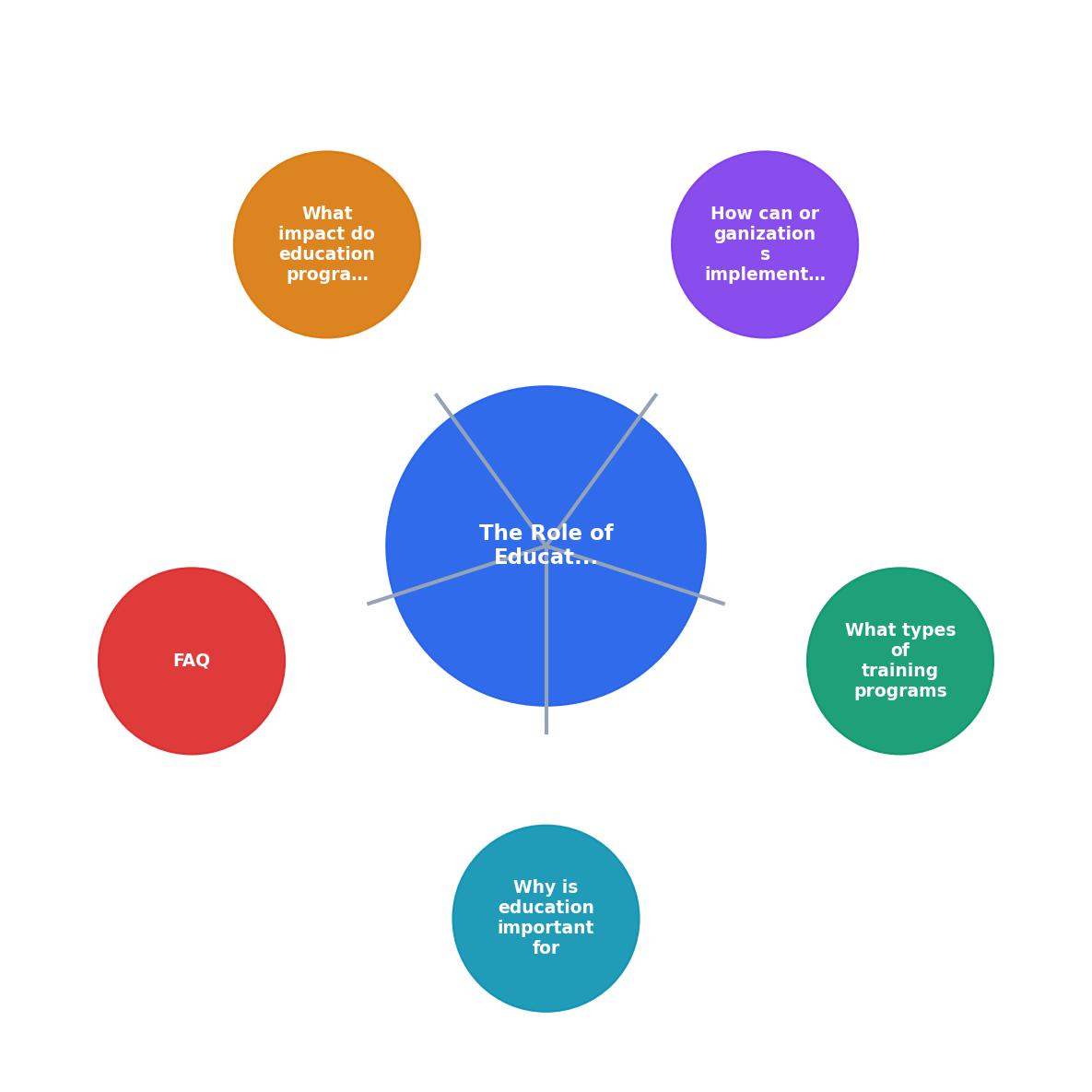
The steps in the diagram break down as: Train team, Audit content, Identify cognitive barriers, Remediate, Monitor, and Retrain. Each cycle builds institutional knowledge that makes the next audit faster and more thorough.
Successful training initiatives
Three real-world examples show what structured education produces:
UK Government Digital Service
GDS embedded cognitive accessibility into its mandatory training for all content designers and interaction designers starting in 2020. The result: government services like GOV.UK consistently score among the highest-rated public sector sites for readability and task completion. Their design system enforces plain language, consistent navigation, and predictable page structures by default.
Barclays accessibility program
Barclays built an internal accessibility champions network across its technology division. Champions receive quarterly training that includes cognitive accessibility modules covering topics like form simplification, error recovery, and reading-level analysis. The bank reported a measurable reduction in customer complaints related to online banking confusion after rolling out the program.
Microsoft Inclusive Design toolkit
Microsoft published its Inclusive Design methodology and trained internal product teams to use persona spectrums that include cognitive scenarios. The toolkit treats cognitive accessibility not as an edge case but as a design constraint that improves the product for everyone. Features like Focus Assist in Windows and Immersive Reader in Edge came directly from this approach.
Here is an example dashboard showing how training investment correlates with accessibility outcomes across these types of initiatives:
Training Impact Dashboard (Typical Org)
How education reduces legal risk

The legal landscape for digital accessibility is tightening. ADA-related web accessibility lawsuits in the United States exceeded 4,600 in 2023. The European Accessibility Act takes full effect in June 2025, covering e-commerce, banking, transport, and public sector digital services. Cognitive accessibility is explicitly referenced in EN 301 549, the harmonized European standard.
Education reduces legal risk in three concrete ways:
- Due diligence documentation. Training records, certification logs, and audit reports demonstrate that an organization took reasonable steps. Courts and regulators weigh effort and process, not just outcomes.
- Fewer violations in production. Teams that understand cognitive barriers catch them during design reviews and QA, not after a complaint or lawsuit.
- Faster response to complaints. Trained staff can triage and remediate cognitive accessibility issues quickly, reducing the window of non-compliance.
Organizations in regulated sectors like healthcare, finance, and education face additional scrutiny. A compliance lead who can point to a documented training program, completed certifications, and regular cognitive accessibility audits has a fundamentally stronger position than one relying on automated scan results alone.
Benefits beyond compliance
Cognitive accessibility education produces returns that extend well past legal protection:
- Better user experience for everyone. Clearer language, simpler navigation, and reduced cognitive load help all users, not just those with diagnosed conditions. A tired parent, a distracted commuter, and a non-native speaker all benefit from the same improvements.
- Lower support costs. Confusing interfaces generate support tickets. Teams trained in cognitive accessibility design interfaces that answer questions before users need to ask them.
- Improved conversion rates. Every cognitive barrier is a potential drop-off point. Removing unnecessary complexity from forms, checkout flows, and onboarding sequences directly impacts revenue.
- Stronger team culture. Accessibility education builds empathy and shared purpose. Teams that understand the "why" behind design decisions make better choices independently.
| Without Training | With Training |
|---|---|
| Audits miss cognitive barriers | Audits cover full WCAG scope |
| Compliance gaps discovered by lawsuits | Issues caught in design review |
| Vague "make it simpler" feedback | Specific criteria-based remediation |
| Reactive, expensive fixes | Proactive, lower-cost prevention |
| Siloed accessibility knowledge | Organization-wide awareness |
Cognitive Accessibility Education Action Plan
Your progress is saved automatically in your browser.
FAQ
Frequently Asked Questions
Additional Resources
- Cognitive Accessibility and Support in Special Education - PMC - This work describes an assistive technology development for cognitive support and training to be used by children of special education schools in Spain.
- Cognitive Accessibility in Education: A Growing Concern - I'm increasingly convinced that cognitive accessibility may become one of the most important conversations in education over the next decade. I' ...
- Importance of Accessibility in Education - Accessibility in education refers to the provision of equal access and opportunities to all students, regardless of their physical, sensory, cognitive, or ...